Home exterior · Gutters · Paid editorial
Gutter guards are a maintenance choice, not a force field
Overflowing gutters stain siding and dump water next to the foundation. Guards can cut how often you scoop leaves. They do not erase the need for a gutter that is pitched, sealed, and big enough for the roof.

Gutters are a dull system until they stop working. A trough full of seed pods sends water over the back edge, into the fascia, and sometimes into the wall. A downspout that dumps at the footing keeps that water against the basement. None of that requires a dramatic storm. A wet week and a maple tree will do it.
Homeowners land on gutter guards when they are tired of the ladder. That is a fair reason to price them. It is a bad reason to skip the question of whether the gutters themselves are worth covering. A guard on a sagging, undersized run still overflows. The estimate visit is where that gets sorted, which is why a free look is more useful than a price per foot quoted over the phone.
Get a free gutter-guard estimateThird-party form. Hiring remains optional.
What the gutter is supposed to do
The roof sheds water to the eave. The gutter catches it and the downspout carries it away from the house, ideally onto a splash block, an extension, or a buried drain that daylight somewhere downhill. If any piece fails, the water’s next stop is the ground beside the foundation or the wall behind the gutter.
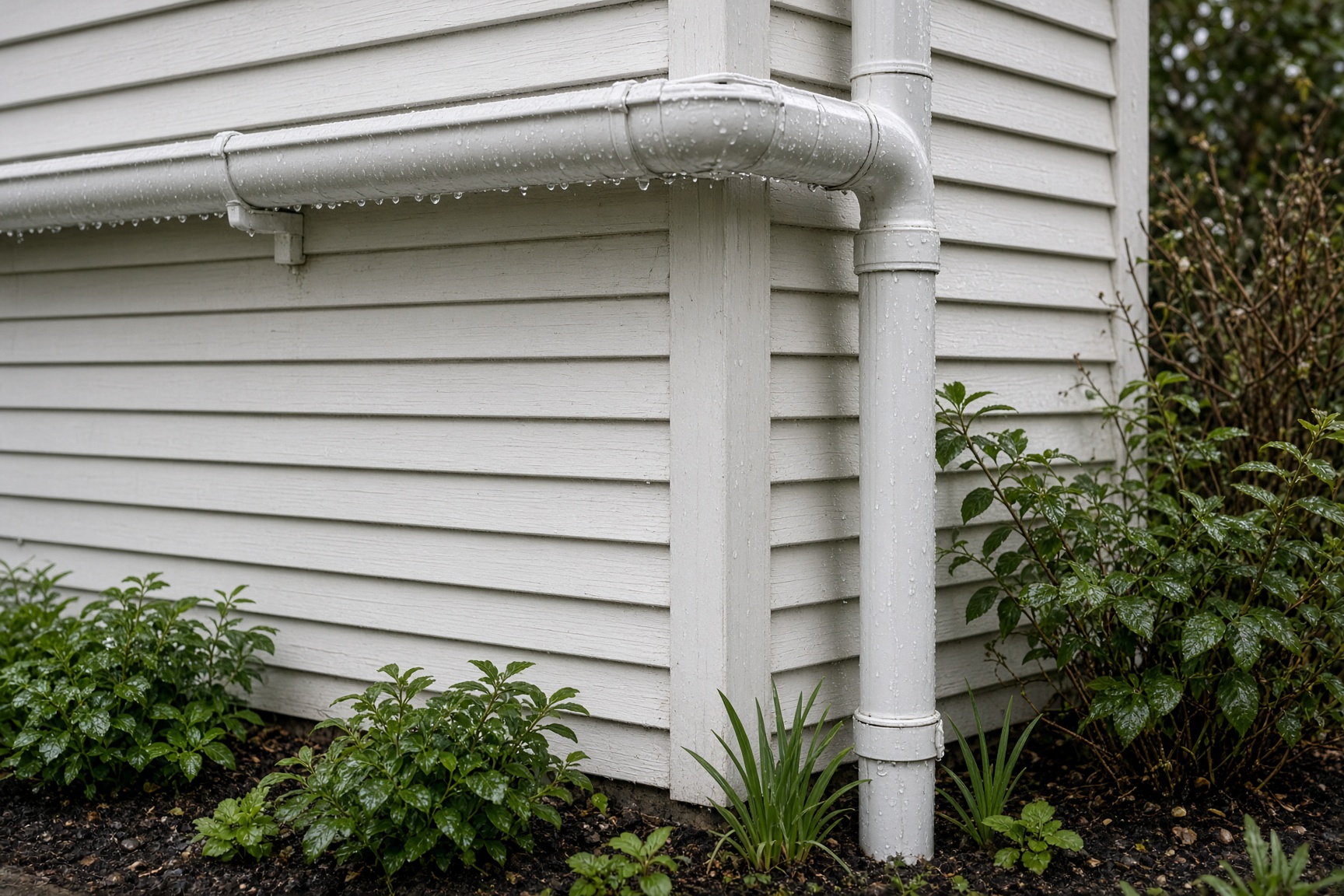
Before paying to cover a gutter, it is worth knowing four ordinary facts about the run you have:
- Pitch. Water should walk toward the outlet. A level gutter holds silt even with a cover on it.
- Size. Many older homes have 4-inch gutters under roofs that now need 5-inch or 6-inch, especially on a long run or a steep slope that dumps fast.
- Hang. Spikes loosen. Hidden hangers fail. A guard adds a little weight and a place for wet debris to sit at the edge. The gutter has to be attached.
- Outlets. One downspout at the end of a very long run is a bottleneck. Covers do not fix that.
The main kinds of covers
Guards are a category, not a single product. Installers and big-box stores sell several ideas. They fail differently, which is the useful thing to understand before a sales visit.

What a careful install includes
Companies that sell professionally installed mesh systems often clean and re-hang the existing gutters as part of the visit, then fasten the cover to the front lip and tuck it under the first course of shingles or against a starter strip. The details matter. A cover that lifts shingles can invite wind-driven rain under the roof. A cover screwed through the roof is a different, usually worse, idea. Ask which method they use on your shingle or metal roof.
Inside corners, valleys, and the area under a downspout from an upper roof are where debris concentrates. A straight-run photo in a brochure does not show those spots. Ask how valleys are treated. Ask what happens at a roof pitch that is very low or very steep. Ask whether the quote includes sealing leaking miters or replacing a crushed elbow.
Manufacturer paperwork sometimes includes a long warranty and a “no clog” promise with conditions: you may have to let the company service the system, and certain debris or improper pitch can be excluded. Read the exclusions before you treat the promise as absolute. Gutter Care Guide does not repeat those promises as our own. If a company offers one, it is their document.
What moves the price
- Linear feet, stories, and how hard the eave is to reach.
- Whether the existing gutter is reused, re-pitched, or replaced.
- Number of corners, outlets, and downspout extensions.
- Roof type. Tile, metal, and steep asphalt each change the labor.
- Add-ons a salesperson may bundle, such as downspout filters or a cleaning plan.
A price per foot with no measurement is a teaser. The useful number follows a measure of your eaves. Regional labor changes the same footage from one metro to the next. Veterans’ discounts and seasonal promotions, when a company offers them, are that company’s policy and can change. We do not advertise a discount we do not control.
How the estimate request works
HomeBuddy’s gutter-guard page is a matching form. You describe the home, typically including size, and a local installer may contact you with a time to measure. The partner page highlights professionally installed micromesh-style protection and a free estimate. Product brand, warranty text, and price are confirmed by the company that shows up, not by this article.
- You leave this page and complete the partner’s questions.
- If a company serves your area, they schedule a look. Not every ZIP is covered.
- You get a written scope: clean and rehang or not, product name, footage, and warranty paper.
- You decide. Asking for the estimate does not start an install.
While they are there, walk the downspouts. A new cover above a spout that still empties at the footing has not finished the water problem. Extensions are a small line item with a large effect.
See gutter-guard estimate optionsOpens HomeBuddy. No payment on this page.
Straight answers
Will I never clean gutters again?
No honest installer should say never. Fine grit, pollen mats, and debris sitting on top of a mesh still need an occasional rinse or brush-off. The goal is fewer trips up the ladder, not a sealed system you can ignore for a decade.
Can guards cause water to overshoot?
They can, if the mesh is blinded, the pitch is flat, or a hood’s slot is wrong for the roof. That is an install and product question to test with a hose during the walkthrough, not a reason to reject the whole category.
Should I replace the gutters at the same time?
If they are rusted through, undersized, or pulling off the fascia, covering them is the wrong spend. A good estimate says so.
Are DIY panels good enough?
On a one-story house, some homeowners fit sectional screens successfully. Multi-story work, valleys, and anything that involves lifting shingles is where people hire. We do not rank brands.
Does this page sell a specific brand?
No. The partner flow is commonly used to price professionally installed micromesh systems. The installer names the product in the quote.
Who operates Gutter Care Guide?
An advertorial site. We are not HomeBuddy and not the crew on the ladder. The button is a referral to their gutter-guard form.
Continue to the estimate formYou can compare the written quote with another company.